
A little over a decade ago, we booked our home on the outskirts of North Bengaluru – the decision spurred by a tight wallet and a desire to flee the city’s chaos. Our workplace was located 25 kms away in the city centre.
“It would be a day trip to your home,” joked our colleagues.
We shifted in mid-2015, but to a rented place near our actual home as the project was delayed. A kachha road, hemmed by eucalyptus plantations on both sides, led to our temporary abode. We enrolled our son in the neighbouring school, and every morning, my husband would walk him to the gate where the school bus would collect him. I would be at the window, like a doting mom, bidding him goodbye.
Once, just as the bus pulled away from the gate, a large bird came and perched on the eucalyptus tree opposite the window. One look and I immediately scurried to take out my camera. By the time my husband arrived, the bird had flown away. But I had the picture.
“Oriental honey buzzard!”

The Oriental Honey Buzzard we saw that day (mid-2015)
We were still in our early years of birding, and we couldn’t believe that we saw a honey buzzard right in front of our house.
A Gradual Transformation
Later, when we shifted to our own apartment, the area around our building was a vast stretch of scrubland. We woke up to the call of grey francolins – those elusive birds you can always hear but rarely see, their distinctive cry reminding me of the rhythmic creaky noise of a handpump at my grandparents’ place. At times, the francolins would be accompanied by the plaintive call of the peacock.
For the next few years, we didn’t have anything exciting to report on birds from our premises. There was construction going on in full swing and we could barely make out the call of the francolins. By 2018, the work was completed and the trees planted in the premises stood taller and fuller. The landscaped garden looked lush, too, and gradually we began to hear chirps and tweets. Soon, purple sunbirds, magpie robins, white-browed wagtails, red-vented and red-whiskered bulbuls became our resident feathered tenants, whizzing around the trees, while ashy prinias and tailor birds called out throatily from the undergrowth.

A spotted dove decides to rest awhile
The Pandemic Years
In 2020, the dreaded COVID-19 pandemic struck.
As we remained huddled inside our houses, the bird populace in the area thrived. From the vantage point in my balcony, I noted new entrants of bird species in our building premises. Small, dark, swallow type birds swooped about restlessly. A neighbour sent me pictures of the birds when they were resting on her window ledge. They turned out to be dusky craig martins – birds that I have never seen before!

Chicks of dusky craig martins; images shared by my neighbour
One day, my son said he had seen a different looking bird in the garden.
“It was dark blue, almost ashy in colour.”
I told him to call me when he saw the bird the next time. He did a step better – he clicked a hazy picture of the bird on his grandmother’s phone. I couldn’t believe my eyes when I zoomed in.
A blue rock thrush at our building – unbelievable!

The special guest (circled) – a blue rock thrush!

Close up shot of a blue rock thrush, not clicked at the building premises
Some nights, I would gaze out of my window, wondering if life would ever return to normal. And there, staring back at me with the solemn wisdom of an old sage, would sit a barn owl—probably judging my overthinking. At other times, I would hear the familiar cries of the spotted owlet, reminding me of our late night drives in the neighbouring villages pre-pandemic, when we would see half a dozen of these owlets, including a feisty little Indian scops owl, scowling at us.
Once, in an absolutely memorable incident, our car lights shone upon a huge owl on a barren field that was turning into a dumping yard. Before we could find our bearing, the owl had disappeared into the dark night. Till date, we wonder if that was an Indian eagle owl that we had witnessed, given its size.
A Dream Come True
As the pandemic faded, it left behind an unexpected silver lining—a thriving community of birds that had made the building premises their familiar ground. The bulbuls and sunbirds had grown bolder, perching on our balcony even as we sat just a few feet away. Reports came of scaly-breasted munias and dusky craig martins building their nests at our neighbours’ homes – in balconies, AC vents and window ledges. I envied them, longing for one to build a nest on my balcony, too. But it seemed like a lost cause—these little birds preferred higher floors and the safety of pigeon nets that kept lurking crows at bay.
Then, one day, against all odds, my manifestation came true.
A pair of purple sunbirds decided to build their nest in a hanging dischidia plant on my tiny balcony, thrilling me to bits. I had hardly recovered from the joy of seeing two baby sunbirds take flight into the world, when another couple appeared on the scene and occupied the empty nest to raise their own progeny. Naturally, I appointed myself the protective, unofficial grandmother—minus the wings. Overjoyed, I documented the entire journey in a series of posts, sharing the fascinating journey of watching the baby sunbirds grow. (Read them here, here and here.)
Purple sunbird parent (male) feeding the chicks
Face-off between a cheeky red-whiskered bulbul and a feisty purple sunbird female
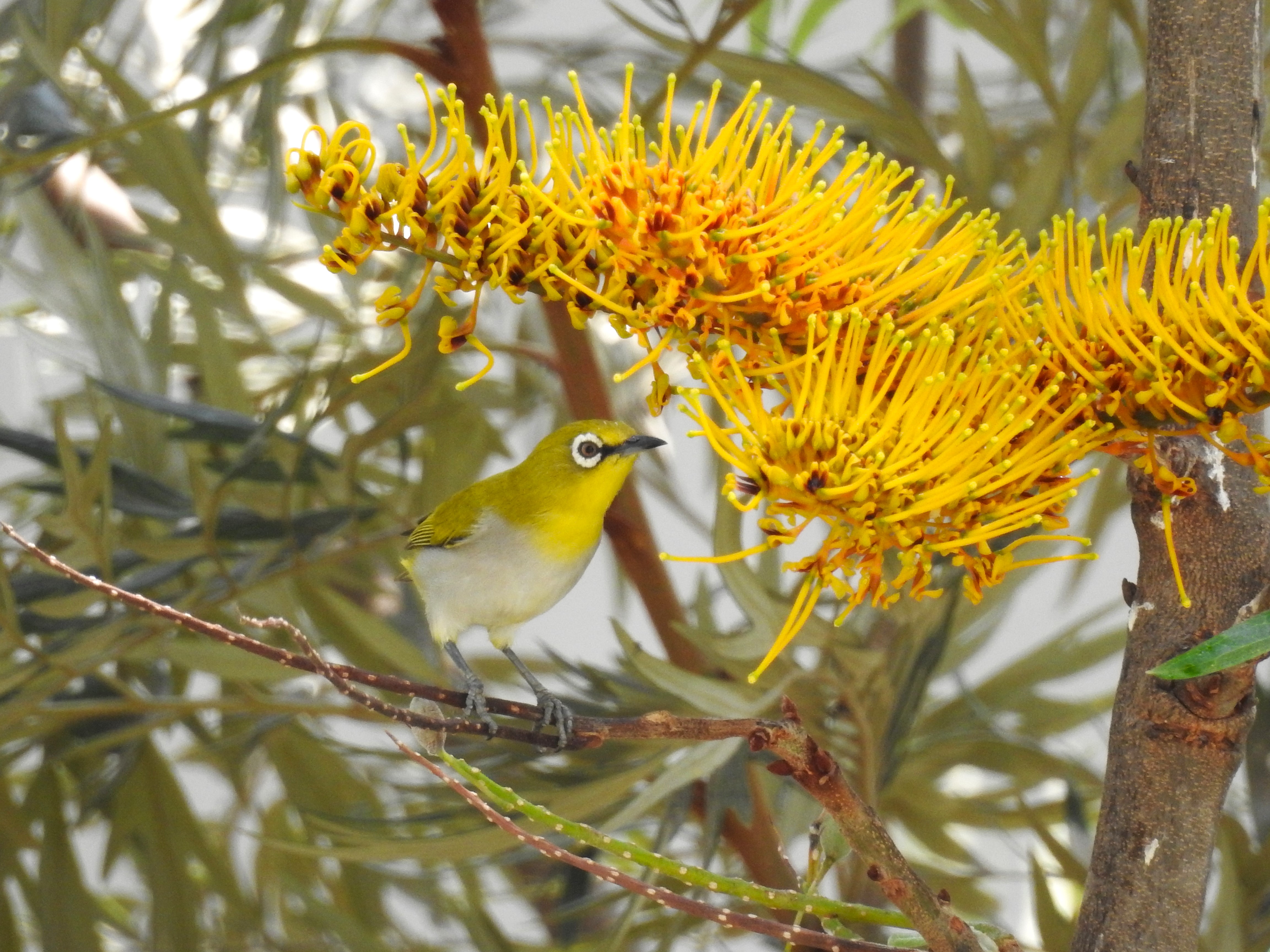
Today, I see cinerous tits and Indian white-eyes pecking at the flowers of the silver oak right opposite my bedroom window. Raucous calls of squabbling rufous treepies lead the morning walkers in the campus to pause and glance up curiously. A lone coucal arrives, flapping its wings noisily and landing awkwardly amongst the branches. Some distance away, beyond the wall, peacocks continue to call.
Yet, I am alarmed to see the fast-paced concretisation of the area around my residence. Tall towers have sprung up all around, seemingly overnight, depleting the habitat of many species. I no longer hear the francolins – the first birds that had welcomed us here. Ferals cats roam around the premises. Cute as they may seem, they turn into ferocious hunters of birds, and many a times I hear the distressing calls of bird parents as they try to protect their young ones.
Hope Springs Eternal
Life is not easy for anyone, even for those that can fly free in the sky.
But, like Dr. Ian Malcolm said in the movie Jurassic Park – “Life finds a way.” So have these little birds. They have scoured for safe places in unfamiliar environments and taken refuge in odd corners. They fly long distances to procure food for their young ones and put up fierce fights against predators.
Above all, they have adapted to urban life.

An Indian white-eye perched on the silver oak tree opposite my window
The march of urbanization, in the name of progress, is unstoppable. All we need for avian life to survive is to create urban forests in residential projects. Landscaping in modern townships should no longer be restricted to just designing ornamental lawns, but they can also encompass a wider spectrum to create and rehabilitate an entire ecosystem.
Until then, I hold onto the hope that my little winged visitors will continue to thrive, and perhaps my balcony will welcome more new babies in the days to come!
PS: I apologize for the grainy bird photos (mostly taken with my phone)—I would have loved to use a proper camera, but the last thing I want is to raise eyebrows among my fellow residents and be mistaken for a suspicious character!
PPS: I have noted 25 species of birds in my building campus. How about yours?


Leave a Reply