
If I had to name one place near Bengaluru that I would gladly return to over and over again, it would undoubtedly be Jayamangali Blackbuck Reserve in Tumkur district. Located adjacent to the village of Maidenahalli, Jayamangali is a remarkable expanse of grassland, interspersed with small woodland patches, that shelters an astonishing diversity of life. With our regular birding haunts fast vanishing under the guise of urban development and rising housing needs (yes, we all know that story), we are left with only a few options — the blackbuck reserve being one of them. Sadly, even this seems to be on the verge of disappearing, judging by our recent visits.

But let’s not start with the sad news — there’s already enough of that.
I first visited Maidenahalli (I prefer this name over Jayamangali) in 2012, when we were still fledglings in the birding arena. No sooner had we entered the blackbuck reserve than we were greeted by a fierce, unwavering stare. Not from a blackbuck, but from a bird that turned out to be the crown jewel of the grasslands – the famous Montague’s Harrier, a winter visitor to the region. And to think that we didn’t recognise it till we opened our bird guide!

Montague’s Harrier (Male)
Since then, the attraction of Maidenahalli has only grown, with every visit yielding the sighting of at least one bird that we couldn’t stop talking about.
Masters of Disguise
The grasslands are a harsh landscape for many species to survive, particularly as they are vulnerable to raptors from above. But nature has provided them with a survival kit – the art of camouflage. It is a tough cover to crack for us birders, and once you do spot the artist, you can’t but help marvel over its ingenuity.
On rare occasions, when luck favoured us, flocks of Chestnut-bellied Sandgrouse would erupt from the grass, invisible until the last moment – rising in unison, their wings catching the morning sun in a burst of golden hues.

Chestnut-bellied Sandgrouse

At times, we would have glimpses of rock bush quails, another camouflage master, scurrying for cover with their adorable little chicks in tow. However, the one ground-dwelling bird that would be slightly more conspicuous than the others were the grey francolins whose incessant calls reminded me of someone furiously working up an old manual water pump. When you hear their call, look out for movement underneath bushy shrubs, and you might just be in luck. Once, while looking for a francolin we actually stumbled upon a barred buttonquail instead!

Rock Bush Quail

Barred Buttonquail

Grey Francolin
Summer Delights
While it is not advisable to visit the reserve during the hot summer months, which also coincides with the monsoon rains, desperation to get away from the city would sometimes lead us there. Even in the sweltering heat or when the rains turned the tracks to mud, Maidenahalli held its own charm and remained a steadfast refuge for its resident birds and a brief sanctuary for the summer visitors. Amongst the latter, southern grey shrikes and red collared doves could be spotted in plenty.
But let me tell you of the bird whose sighting led my husband to coin a new name for it. We were driving through a patch where we had seen sandgrouses previously, near a small water body, hoping to see them again, when we suddenly came upon three long-legged birds standing as still as statues. In sheer excitement, my husband merged their name with “sandgrouse” and yelled out, “Crouser! Crouser!”
For the first time ever, we were looking at the elusive Indian Courser. Till date we call it by its new name.

Indian Courser

Red Collared Dove

Yellow-wattled Lapwing
Once, an intriguing bird caught our eye — familiar, yet oddly different. It led us on a merry chase before settling on the ground, and when we finally got a good look, we were stunned: a leucistic Ashy-crowned Sparrow-Lark! No wonder it had seemed familiar all along.

Ashy-crowned Sparrow-lark (Leucistic)
A Winter Wonderland
Come November, as the monsoon clouds gradually recede, leaving behind a fresh, lush green landscape, the grasslands come alive with the symphony of migratory birds that have travelled hundreds of miles to spend their winter in the salubrious climes of the southern peninsula.
The first birds to draw your attention would be the tiny, restless ones, ranging from common stonechats to buntings and warblers, even as the resident bush larks sang their hearts out. On every visit, one particular species would stand out who we would call “the hero”. If on one visit the plucky Zitting Cisticola played the hero, then on another, the Grey-necked Bunting stole the limelight — and once, the Eastern Orphean Warbler took centre stage. There were never any dull moments in Maidenahalli.

Grey-necked Bunting

Zitting Cisticola

Red-headed Bunting

Common stonechat
Raptors’ Paradise
The grassland is a veritable hunting ground for raptors. Besides the visiting Montague’s harriers and the common kestrels, Maidenahalli has its fair share of resident birds of prey – the most commonly sighted ones being the Oriental Honey Buzzard and the White-eyed Buzzard. With the fierce afternoon sun compelling us to take rest in the shade, we would pass our time looking up as shikras, kestrels and black-shouldered kites hovered overhead, scouring for their quarry on the ground.

Common Kestrel

White-eyed Buzzard (Adult)

White-eyed Buzzard (Juvenile)

Montague’s Harrier (Female)
Then, as the sun dipped on the horizon westwards, the harriers would make their appearance, increasing their circling radius gradually towards their roosting grounds. While it is tempting to follow them, one must resist the urge to veer off the tracks, as driving over the fields in such overzealous pursuit can endanger the smaller birds roosting there.
The small but bold bay-backed and long tailed shrikes, who I like to call masked bandits, are also formidable hunters, though not included in the true raptors’ gang. Their characteristic impaling of prey on thorns or barbed wire to tear it apart gives them a fierce reputation. The shrikes are the only birds that you can be assured of seeing all through the day.

Green bee-eater

White-breasted Waterhen
Evening Performances
We usually spend the entire day in the blackbuck reserve, and while there is plenty to see in the early mornings, my personal favourite is the golden hour of late afternoon, and that magical first half-hour of dusk. It is then that the birds fly home to roost, and the grasslands come alive with their pre-roosting rituals.
Flocks of Rosy Starlings whirl around their roosting spots, creating mini murmurations as they shift uncertainly from tree to tree, their calls filling the air. Just when you think the spectacle is over, they take off again in a flutter — and the dance begins anew. Mesmerised, we would simply watch on.

Rosy Starling

Large Grey Babbler and Brahminy Starling
Another cherished memory is that of witnessing scores of green bee-eaters dust bathing at sunset. We were about to reach the sanctuary’s exit when bee-eater after bee-eater swooped down to the middle of the road and began to bath vigorously in the dust. Soon, more birds landed in the scene, raising puffs of dust. It was an adorable sight to see these little birds jostle amongst themselves, and I tried my best to capture them in my camera.
Do take a look at the amateur reel that I made for Instagram.

Green Bee-eater Roosting
A World Beyond Birds
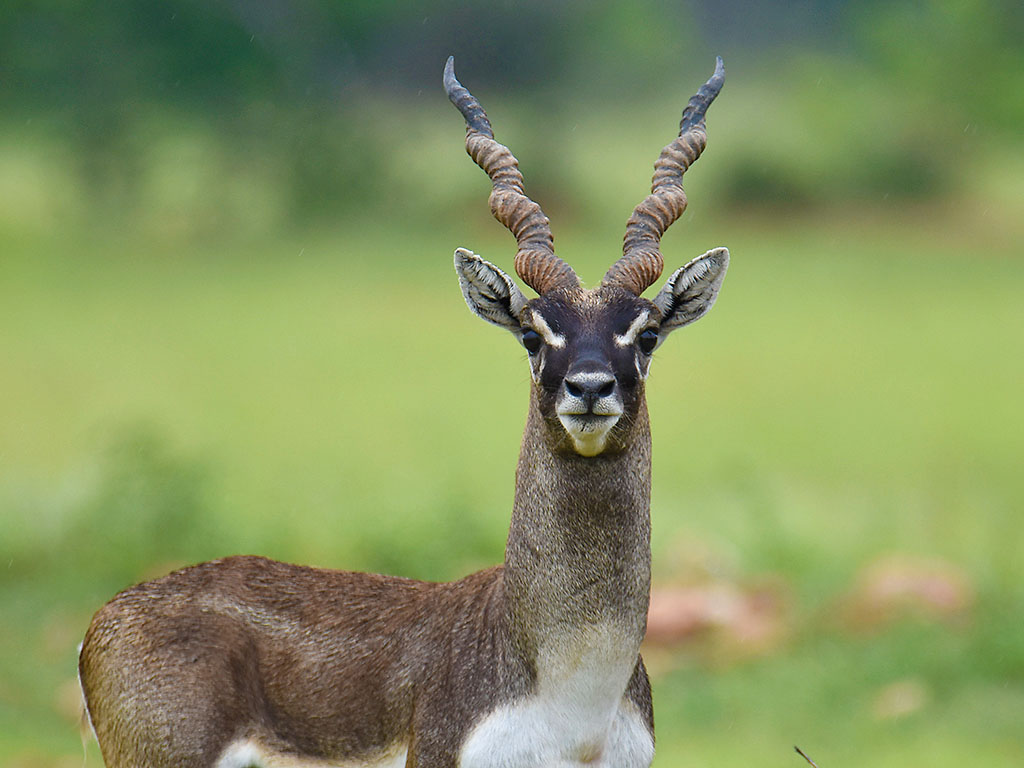
There is infinitely more to Maidenahalli than one can fathom in a single visit. As if the bird sightings alone weren’t enough, the region harbours a number of reptilian and mammal species as well. Besides the blackbucks, of course. But that’s a story for another day.
More importantly, Maidenahalli has changed considerably over the years we have been visiting it. While change is inevitable, with shifting climatic patterns and seasonal fluctuations, the growing conversion of open grasslands into agricultural land carries ominous implications. I shudder to think what it would mean to lose this incredible gem someday. Until then, I hold on to hope — that all is not lost, and Maidenahalli will remain a steadfast constant in my life.

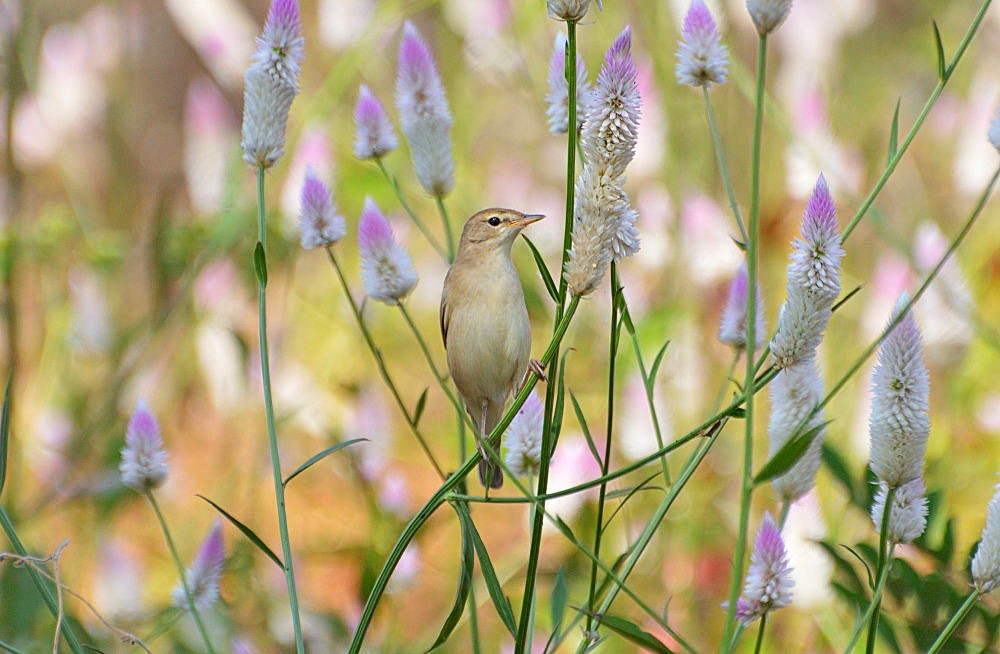
Syke’s Warbler
PS: Here’s another post on Jayamangali – beyond the birds:


Leave a Reply