
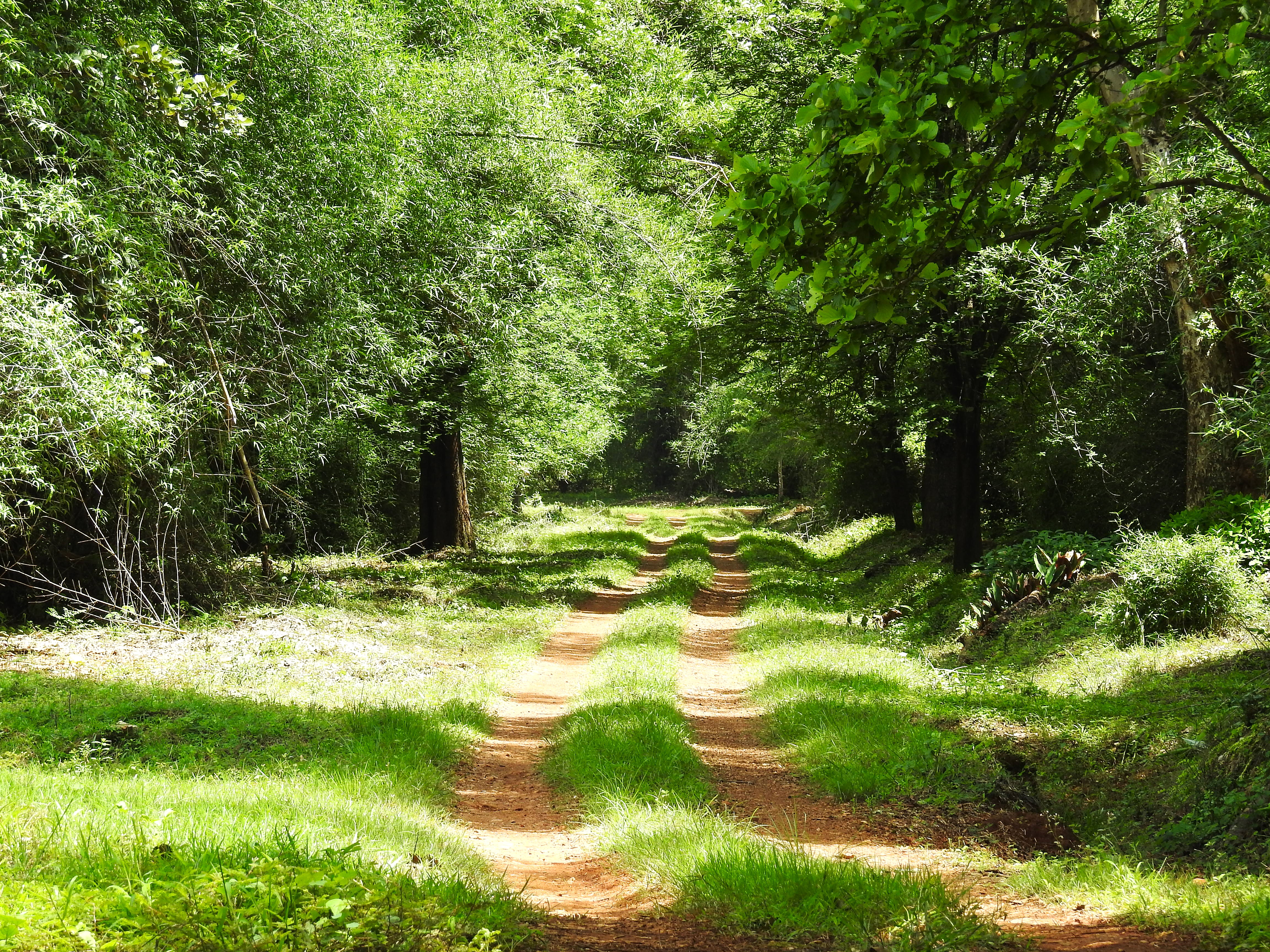
I paused to catch my breath, looking dispiritedly at my son’s olive-green-clad figure fast receding around the bend in the jungle track. Apprehensive about falling behind and being left alone, I turned around and, much to my relief, saw that one of the forest guards assigned to our group was still following us. Taking a deep breath, I picked up my pace again.
I was participating in the 11th edition of the Karnataka Bird Festival, joining a day late and missing the inauguration ceremony as well as the first day’s programs. This was my first bird festival, and I was thrilled to see that the event was taking place in Bhadra Tiger Reserve – the first place in Karnataka that had whetted our appetite for bird watching, back in 2012. The sight of hundreds of river terns whirling around a tiny island on the Bhadra reservoir was still fresh in my mind. Unfortunately, the participants had already been taken on a boat safari to the island on the first day. We could only look longingly at the wonderful shots clicked of the river terns in their various stages of life, right from the fledglings to their doting parents.


An Early Start
The second day’s itinerary looked promising, as we lined up in front of the Kuvempu University hall in the early hours of dawn. Cups of hot coffee later, we were divided into teams and huddled into buses leaving for separate routes, our packed breakfast in hand. Our destination lay over 115 km away, towards the Muthodi range, located at the southern part of Bhadra Tiger Reserve. Having woken up at 4 am, I decided to rest my eyes awhile and to my embarrassment, fell asleep quite soundly. A sharp nudge from my son woke me up.
“Look outside,” he turned my face towards the window. “It’s so beautiful!”
It certainly was, as we made our way winding through coffee estates, silver oak plantations and rows of pencil thin areca nut trees. The hills kept us company all along the way. The sun was shining well overhead when we reached Muthodi safari zone, where we were transferred to safari vehicles that drove us through the beautiful, verdant green forest to the Hipla anti-poaching camp. Once at the camp, we quickly had our packed breakfast and embarked on another vehicle. This time, accompanied by a number of forest guards, we went deeper into the forest, towards the core.

On the Jungle Track
We got down at a point where a jungle path was discernible, and finally, our birding itinerary started. The first thing that caught our attention was several paw prints on the ground. It had rained sometime back, the prints looking quite fresh.
“Karadi,” said the forest guard. “A sloth bear.”
He pointed at another print.
“That’s a leopard.”

We spotted the marks at regular intervals, and I hoped we wouldn’t come face to face with the makers of those prints. A sloth bear could be more dangerous than a big cat, when triggered. At times, we stepped over elephant dung – another heavyweight of the jungle that I dreaded facing. Although known as gentle giants, they could often be unpredictable and moody.
It was almost noon by the time we had started our trek, there being a lull in bird activity. Yet, we heard and saw a number of these winged beauties, zipping and flitting through the thick canopy overhead. The melodious song of the Southern hill myna and the varying medley from the vast repertoire of the black drongo kept the orchestra going in the jungle, occasionally joined by the soothing music of flowing water. We had glimpses of lesser goldenbacks while small minivets flashed their reds and yellows, offsetting a bar-winged flycatcher shrike with its black-and-white plumage. It was difficult to photograph these restless birds that refused to perch, but the fun lay more in spotting and identifying them mid-air.

The Attack of the Leech Brigade
I was merrily trundling along, stopping now and then to admire at naturally occurring formations in trees or to take a closer look at some fine fungi specimen.


The forest guards never left our side, and I made sure I never left theirs. Suddenly, the guy walking besides me stopped, scrunched up his trousers a bit and flicked away something, nonplussed.
My heart skipped a beat. It was happening. The thing that I feared the most, more than all the sloth bears and elephants combined. The leech(es)!
A quick flashback took me to my childhood in Assam when we used to have a few of these persistent creatures clinging to us every time we ventured outdoors in the monsoons. Our dogs, poor fellows, would have leeches up their nostrils that would send them to mad fits of sneezing, till they were whooshed out. A core memory that I believe left me scarred was the day a huge, greenish-bluish, fat leech clamped itself on my younger sister’s sole when we were crossing a muddy puddle bare feet on our way back from school. (Yes, I have stories to tell my grandchildren of how we crossed ‘rivers’ to go to school.) We were quite young then and I remember trying my best to pry off the leech from her foot as she howled her heart out, using twigs and stones, feeling helpless and appalled at the same time. It left a dark mark on her foot that stayed for a long time afterwards.
Meanwhile, my birdwatching trek was taking a different turn. I became oblivious to everything around me as I focussed entirely on evading the leeches. By then, they had come out in full force and were latching onto everyone that they could get hold of. Interestingly, I had gone to buy leech-proof socks before coming, and the young man at the shop had given me a ‘hack’ against the leeches instead of the socks.
“The trick is to wash your feet with Dettol,” he had said. “They won’t come near you.”
He was wrong.
There was no trick, no hack. You just had to accept them, move on and not stop.
By the time the trek ended, and we reached the rendezvous point, most of us had attained a state of zen from surrendering ourselves to these tiny but mighty forces of nature.
The Hits and Misses
While the leeches did their thing, we managed to see something truly wonderful on the trek. It had long been my wish to see a green vine snake, and it finally came true on this trip. We were nearing the end of our trek when some members of our group spotted this gorgeous vine snake by the side of the road. If I hadn’t known there was a snake there, I would have easily passed it by – its camouflage that good.

Another magnificent memory of this trip would be the sumptuous meal that greeted us when we returned to the Hipla anti-poaching camp. The piping hot, delicious lunch prepared painstakingly by the forest guards in the middle of the deep forest with limited resources was one of the best meals I have had. I feel indebted to these brave men who, in the middle of their hard duties, took out time to cook for so many of us. Their hospitality is something that I would cherish forever. It was a beautiful afternoon as we sat cross legged on the forest ground and enjoyed each morsel.
One of my biggest regrets has been my decision to come back to the forest office at Muthodi, forsaking the second part of the trek planned for the day. My husband and son, however, had better sense and continued to follow the itinerary. They came across some amazing sights and sounds, including that of a huge monitor lizard feeding on the carcass of a mouse deer. I got FOMO vibes as I listened to my son describing a big flock of grey-fronted green pigeons that had alighted at dusk, from the treetops to the forest floor, to forage on the ground and drink water from a small stream. They had been joined by the graceful imperial green pigeons, while a little way ahead, dark blue tiger butterflies congregated on a host plant. The photographs, of course, don’t do justice to those sights.


Hope on the Horizon
Another big takeaway from this bird festival would be some amazing presentation of work done by young nature aspirants. I particularly loved the engrossing short documentary and presentation on the research done on river terns by a young enterprising youth Karthik NJ. He had covered detailed aspect of the courting, breeding and parenting behaviour of these intriguing birds, explaining his methodology and how he had made his observations using camera traps and hired gear. It was a fascinating story of the river terns and their fledglings, told through meticulous monitoring and study, without involving any external grants or funds. Says a lot about what one can achieve in life when driven by passion. With people like him out there, there’s definitely hope for a better future for nature and wildlife in the world.

The bird festival ended on a high note, as we all collected our participant certificates the next day at the closing ceremony. The speech by Yashpal Kshirsagar, the Field Director of Bhadra Tiger Reserve, told us the role of every person who worked patiently behind the scenes to make the festival a success, something that is not easy to achieve in a jungle set-up. Our utmost respect towards these individuals and volunteers, and perhaps with more exposure, more people would come to understand the wonderful realm of birds and the need for nature conservation. Karnataka, in this regard, is a step ahead of the others with its bird festival initiative.

As for myself, I can’t wait to attend the next edition of Karnataka bird festival. And this time, I would be ready with my leech-proof socks!


Leave a Reply